Lucky Cleats and Chicken Dinners: The Real Science Behind Baseball's Wildest Rituals
Wade Boggs ate chicken before every single game he played. Every. Single. One. Over a career spanning more than two decades, that's a whole lot of poultry. Former closer Turk Wendell brushed his teeth between every inning and chewed black licorice on the mound like his life depended on it. And if you've spent any time around a professional clubhouse, you already know these guys aren't outliers — they're just the most famous examples of a culture absolutely soaked in ritual, routine, and superstition.
But here's the question that doesn't get asked nearly enough: does any of it actually work?
What's Actually Happening in the Brain
Sports psychologists have been poking at this question for years, and the answer is more interesting than a simple yes or no. Dr. Stuart Vyse, a behavioral scientist who literally wrote the book on superstitious thinking (Believing in Magic: The Psychology of Superstition), argues that rituals serve a genuine psychological function — even when there's zero causal connection between the behavior and the outcome.
"When athletes perform a pre-performance ritual, they're essentially flipping a mental switch," says Vyse. "It signals to the brain that we're moving from ordinary time into competition mode. That transition has real value."
The mechanism at work is what psychologists call perceived control. Baseball, more than almost any other sport, is a game defined by failure and uncertainty. The best hitters in the world make outs seven times out of ten. Pitchers throw into the chaos of weather, umpire variability, and batter psychology. In an environment that unpredictable, the brain craves something it can control. A ritual — even an arbitrary one — provides exactly that anchor.
Research published in Psychological Science found that participants who performed self-invented rituals before a stressful task showed measurably lower anxiety and better performance outcomes than those who didn't. The ritual didn't need to make logical sense. It just needed to be theirs.
Inside the Clubhouse: Players Speak Up
Talk to active minor leaguers and big leaguers about their routines, and you'll hear everything from the mundane to the genuinely bizarre. One Double-A infielder described always putting on his right cleat before his left — a habit that started in Little League and has followed him through fifteen years of professional ball. "If I do it wrong, I feel off for the whole warmup," he said. "I know it doesn't make sense. I don't care."
A veteran starting pitcher — who asked not to be named because, in his words, "my rituals are personal" — described a 47-minute pre-start routine that includes a specific playlist listened to in exact order, a particular meal eaten at a precise time, and a warm-up sequence he hasn't deviated from in six seasons. "It's not magic," he said with a laugh. "It's just that when I do all of it, I feel ready. When something gets disrupted, I have to work harder to get my head right."
That distinction matters. The pitcher isn't claiming his playlist controls the spin rate of his slider. He's describing a psychological preparation process that happens to use ritual as its scaffolding.
The Placebo Problem — and Why It Doesn't Matter
Skeptics love to point out that superstitious rituals are, at their core, placebo effects. And technically, they're not wrong. There's no mystical force channeling good fortune through a pair of unwashed socks. The socks don't know anything about exit velocity.
But dismissing the placebo label as a debunking is a mistake. Placebo effects are real effects. When athletes believe they're performing at their best, they frequently do. Confidence reduces muscle tension, improves decision-making speed, and lowers the cognitive load associated with self-doubt. If an absurd pre-game ritual is the delivery mechanism for that confidence, the results are functionally identical to confidence arrived at through more "rational" means.
Dr. Michael Gervais, a high-performance psychologist who has worked with elite athletes across multiple sports, frames it this way: "The ritual isn't the point. The state it creates is the point. Anything that reliably gets an athlete into a focused, confident, ready mental state has value — full stop."
When Superstitions Become a Problem
It's worth noting that not all rituals are created equal. Sports psychologists draw a line between helpful routines and compulsive behavior that undermines performance. If a player's pre-game ritual takes three hours, involves anxiety when disrupted, and starts bleeding into his personal relationships, the ritual has stopped serving him and started controlling him.
The healthy version is flexible enough to absorb disruption without derailing the player's entire mental game. The unhealthy version creates fragility — a player who falls apart the moment his lucky batting gloves go missing is more vulnerable, not less.
Coaches at the major league level are increasingly aware of this distinction. Several organizations now employ full-time mental skills coaches specifically to help players build routines that are grounding rather than rigid, confidence-building rather than dependency-creating.
The Cultural Glue Nobody Talks About
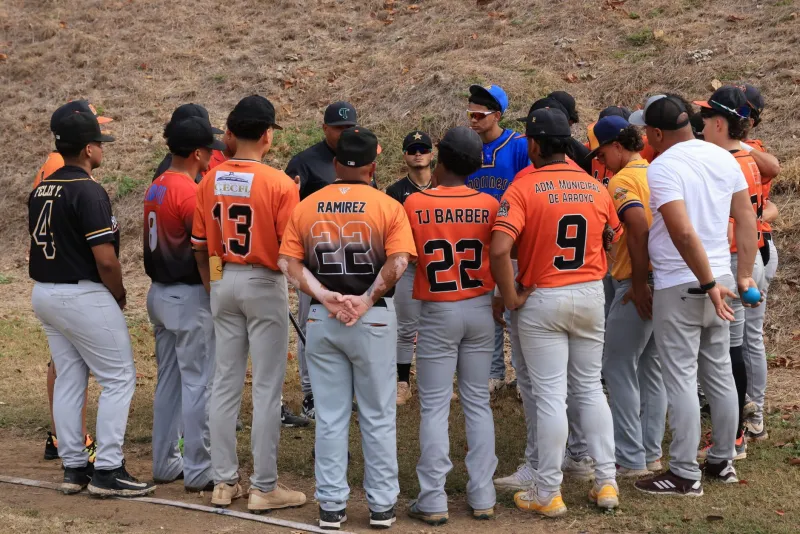
There's one more dimension to baseball superstitions that pure psychology doesn't fully capture: community. Clubhouse rituals — the handshakes, the walk-up songs, the shared pre-game meals — aren't just individual performance tools. They're the connective tissue of a team culture.
When 25 guys share a ritual, they share an identity. They share a story. And in a sport where the season runs 162 games and the margins between winning and losing are razor-thin, that shared identity might matter as much as any individual player's pre-game chicken dinner.
So the next time you watch a batter step out of the box, adjust his batting gloves twice, tap the plate, and take a practice swing in the exact same motion he's used for a decade — know that you're watching something that's simultaneously superstition, psychology, habit, and culture all rolled into one perfectly human ritual.
Boggs had the right idea. He just maybe could've mixed in some variety with the menu.