Before the Breakdown: How AI Is Quietly Becoming Baseball's Best Athletic Trainer
The Problem With Waiting Until It Hurts
For most of baseball's history, the injury prevention playbook looked something like this: a player starts feeling something, tells the trainer, gets an MRI, and either plays through it or hits the IL. Simple. Also wildly inefficient.
The average MLB team loses somewhere between 20 and 30 games a year to injuries, and that's a conservative estimate. When you factor in what star players cost — both in salary and in postseason hopes — the stakes become obvious pretty fast. So it's no surprise that front offices started throwing serious money at a different question: what if you could see the injury coming before the player even knows it's there?
That's exactly what a growing wave of AI-powered biomechanical systems is trying to answer, and the results are starting to turn heads across the league.
Motion Data: The New Scouting Report
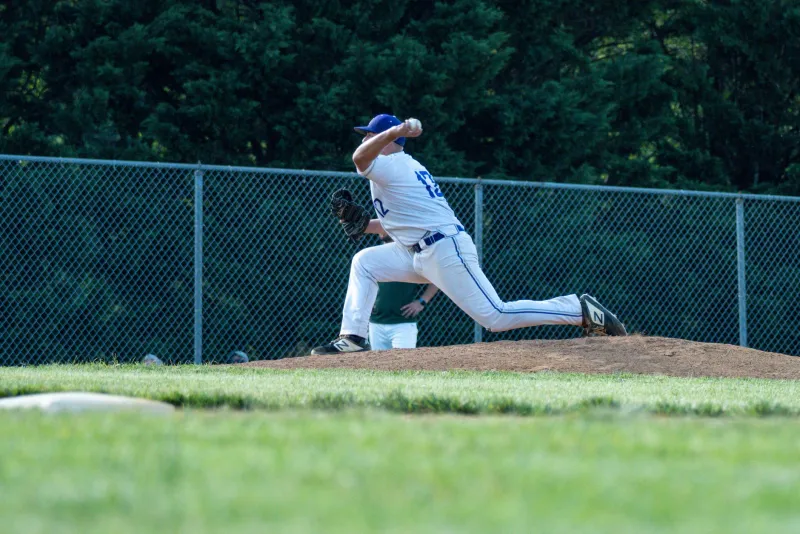
Here's how the tech generally works. High-speed cameras — sometimes dozens of them — track a pitcher's or hitter's body at a granular level, breaking down movement into hundreds of individual data points per second. Think elbow angle at release, hip rotation speed, shoulder load, stride length. Stuff that used to live entirely in a pitching coach's gut feeling now gets quantified and logged after every single bullpen session.
Combine that with wearable sensors — smart sleeves, connected compression gear, even instrumented baseballs — and you're building a real-time physical portrait of every player on the roster. The AI layer then compares those movement signatures against massive historical datasets, flagging deviations that have historically preceded specific injury types.
The Los Angeles Dodgers have been among the most aggressive adopters of this kind of infrastructure. Their player development pipeline has reportedly integrated biomechanical screening at multiple levels, from the majors down through their minor league affiliates. The idea isn't just to protect current roster contributors — it's to protect investments years before those players even put on a Dodger blue uniform.
The Yankees, meanwhile, have leaned heavily on the Motus sleeve and similar wearables to monitor pitcher arm stress in real time. The device tracks ulnar collateral ligament stress — the ligament involved in the dreaded Tommy John surgery — and alerts trainers when a pitcher's numbers start creeping into dangerous territory. It doesn't replace a doctor's judgment. But it gives the medical staff a data-backed reason to start a conversation before a pop in the elbow forces the issue.
What the Algorithm Actually Looks For
This is where it gets genuinely fascinating. It turns out the human body telegraphs injury risk in ways that are almost invisible to the naked eye but statistically significant at scale.
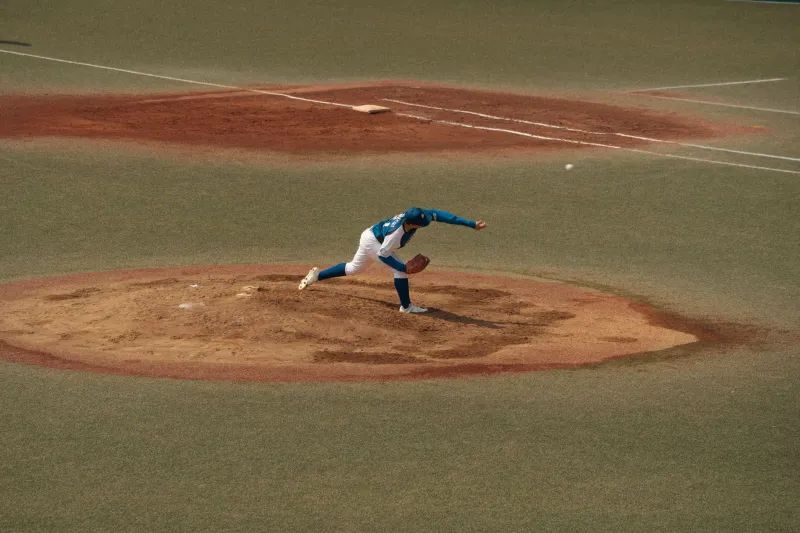
A pitcher who is starting to favor a tired arm might subtly alter his hip-to-shoulder separation — the rotational gap that generates velocity. The change might be fractions of a degree. A coach watching from the dugout won't catch it. But a system processing 600 frames per second absolutely will, especially when it's been trained on thousands of prior examples of what a fatigued or pre-injured pitcher looks like.
Similar patterns show up in position players. A hitter compensating for a nagging hamstring might shift weight distribution during his load phase. A fielder with early-stage knee inflammation might show asymmetric deceleration patterns when tracking fly balls. These aren't things players consciously do. They're the body's instinctive self-protection kicking in, and they often show up weeks before a formal diagnosis.
The AI's job is to recognize those patterns and raise a flag. What happens next is still very much a human decision.
The Human Element Doesn't Go Away
That's an important nuance that gets lost in a lot of the hype around sports analytics. Nobody is handing a laptop to a machine and letting it decide whether Clayton Kershaw pitches on Tuesday. The technology surfaces information. Coaches, trainers, and team physicians still interpret it, weigh it against everything else they know about a player, and make the call.
What the AI does is change the quality of that conversation. Instead of a trainer saying "something feels off" based on instinct, they're walking into a meeting with a printout showing a 12% deviation in arm slot consistency over the past two weeks and a historical correlation to flexor tendon strain. That's a different conversation.
Some players have pushed back on the surveillance aspect — and honestly, that's a fair discussion to have. The MLBPA has been watching this space carefully, and questions about data ownership, privacy, and how performance-related health data might influence contract negotiations are very much live issues. The technology is moving faster than the collective bargaining framework around it.
Small Market Teams Are Catching Up Fast
One of the more interesting wrinkles here is that this isn't just a big-market arms race anymore. The cost of biomechanical analysis software has dropped significantly over the past five years, and several third-party vendors now offer subscription-based platforms that even smaller organizations can afford.
Teams like the Tampa Bay Rays — long known for doing more with less — have been quietly building out their own versions of these systems, using a combination of commercial tools and in-house data science talent. When your payroll is a fraction of what the Yankees spend, keeping your best players healthy isn't just nice to have. It's the competitive strategy.
The Bigger Picture
Zoom out and what you're really seeing is a fundamental shift in how baseball thinks about athletic performance. The old model treated injury as a random, largely unavoidable cost of doing business. The new model treats it as a predictable outcome of measurable physical patterns — something to be managed, mitigated, and in some cases, prevented entirely.
Will AI eliminate baseball injuries? Not a chance. The game is too physically demanding, and the human body too complex. But if a team can prevent even two or three significant injuries per season through early intervention, the competitive and financial return is enormous.
The pitch still tells a story. Now, for the first time, teams are learning to read it before the arm gives out.